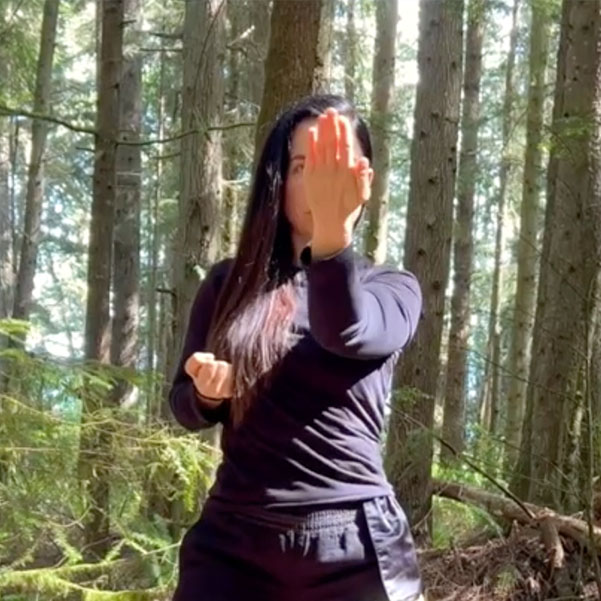
What It Is
Tan Sao — “dispersing hand” or “palm-up hand” — is one of the core three arm positions in Wing Chun. The forearm is horizontal, palm faces upward, and the elbow sits just below wrist height, angled inward toward the centreline. It deflects inward attacks by redirecting upward and outward.
It appears in Sil Lim Tao as one of the very first positions, which tells you something about its importance. In some lineages it is described as the “mother technique” — the shape from which much else is derived.
Deceptive Simplicity
The reason beginners get Tan Sao wrong is the same reason they get most Wing Chun techniques wrong: they make it about the hand. The hand is almost irrelevant. Tan Sao works because of the elbow’s relationship to the centreline and the way the forearm angle creates a natural redirect when contact is made.
A palm-up hand with no structural connection to the elbow and shoulder is just a palm-up hand. The shape is the output; the structure is the input.
The Wrist Control Potential
One of the more interesting applications of Tan Sao is what happens when you combine it with finger control. Because the palm faces upward, there’s a natural trapping potential against a grabbing hand. The dispersing action allows you to follow and redirect while simultaneously controlling the attacker’s wrist from below.
This is relatively advanced application and I’d caution against drilling it in isolation before the core structural habit is solid. But it’s worth knowing it’s there.
Tan Sao vs. Other Systems
If you’ve trained in other martial arts, you’ll recognise palm-up deflections in various forms. What makes Wing Chun’s version distinctive is the specific angle of the elbow and the insistence on maintaining centreline orientation throughout. The technique doesn’t chase the attack to the outside — it meets it at the centre and disperses.
The Palm-Up Problem Most People Skip
Tan Sao looks deceptively simple — palm up, elbow in, forearm angled outward from the centreline. Most practitioners learn the shape quickly and then spend years wondering why it doesn't feel as strong as it looks in demonstrations. The issue is almost always in the relationship between the elbow and the ribcage.
The elbow in Tan Sao should have a specific tension — not rigidly pressed against the body, but drawn inward enough that there's structural connection to the core. When the elbow drifts wide, you lose the connection. When it presses too close, you lose the deflective angle. The sweet spot is narrow and requires deliberate drilling to find and maintain.
Tan Sao in Sil Lim Tao
Sil Lim Tao introduces Tan Sao early and revisits it repeatedly — and for good reason. Each section that includes Tan Sao is developing a slightly different quality: the first introduction builds the basic shape, later repetitions develop the ability to hold structure while applying forward energy, and the final sections work the transition in and out of Tan Sao from adjacent positions.
If you treat every Tan Sao in Sil Lim Tao as the same movement repeated, you're missing most of what the form is trying to develop. Slow down and ask what each specific repetition is asking of your structure.
Under Pressure in Chi Sao
In Chi Sao, Tan Sao gets tested constantly. A partner who understands pressure will push into your Tan Sao looking for the moment your structure collapses inward — the moment the elbow gives or the wrist angle breaks. When that happens, you've lost the centreline and opened your own gate.
The correct response to pressure on Tan Sao isn't to push back harder. Wing Chun doesn't win force-on-force. The response is to let the incoming energy continue past its target while your other hand follows the opening that creates. Tan Sao holds; the other hand acts.
What Makes It Unique in Wing Chun
Most striking arts use the palm-up position only as a grab or pull. Wing Chun uses it as a primary structural shape that simultaneously deflects, controls the centreline, and creates counter-attack pathways. That's genuinely different — and it's part of why Wing Chun's hand positions can feel foreign to practitioners of other styles when they first encounter them.
Kendra’s Verdict
Tan Sao is the technique you’ll use most and think about the least — until you train with someone who really understands it, at which point you’ll realise you’ve been doing a rough approximation. Revisit it often.